Shopping is A Therapy
Shopping redefine relations !

wRite a Review n Rate your concerned (e)SHOP, (e)FOODIE and (e)MARKET

Prepare for the upcoming school year with Luther and stay ahead with the latest technology. With approvals for up to $5,000 or higher, you can shop now and pay later, ensuring you have everything you need for success. Embrace the convenience of flexible payment options while getting equipped with cutting-edge gadgets.
BloomChic | Live with Ease, Dress with Joy

$22.80
Get $5 off orders over $39
Code: LOVE5
Get $10 off orders over $69
Code: LOVE10
Get $15 off orders over $129
Code: LOVE20
<!--
Shipping, taxes, and discount codes calculated at checkout. --> Check Out
Note
Prices in . You will pay at checkout in USD, exchange rate may vary.
OK

Loading
UP TO 50% OFF
New user only
Please enter a valid email address
New user only
Please enter your email
Please select 'I agree' to continue.
Spin the wheel
Unlock 15% Off
No, Thanks
No, Thanks

Valid for a limited time only.
Continue shopping
Only one chance to save BIG
Give up opportunities for large discounts?
Claim my savings
Give up chance for 50% off


Branded gifts are the perfect way to show pride in your organization. From new hire onboarding and company celebrations, to conferences and events - gift the perfect Swag for any occasion!


Snappy makes sending branded gifts effortless. How? We handle it all: gift curation, design, fulfillment, shipping, and everything in between. All you need to do is choose the lucky recipients! We can help you deliver branded gifts in two ways:

Send your team a curated collection of SWAG choices with your design
Employees choose the branded option they love most from the collection
We take care of all the rest!
Choose one item to send from our selection of more premium choices
Enjoy expert guidance from professional merchandise consultants and designers
Celebrate your special occasion with the same premium gift for everyone
Our on-demand swag gives recipients the power to choose their branded gift from a collection of items, without requiring you to purchase the gifts upfront. Each gift featured in the collection will be branded and shipped on-demand. Simply send us the design you’d like, and we’ll do the rest.
Designed for more defined branded gifting occasions like company milestones or holidays, Premium gives you access to more retail brands, branded kits and boxes, unique premium items, and expanded customization options. If you know exactly what you want to send or like the idea of everyone receiving the same gift, Premium is the choice for you.
Submit your company logo(s) & brand guidelines, pick the items you want to offer, and we’ll do the rest!
Upload recipients, choose your featured item, personalize your message, and schedule the send date.
Your recipients enjoy a fun and personalized experience as they choose their own gift.
Recipients enter their shipping information and their company-branded item will arrive in a snap!

Spread smiles with Snappy!
Explore how our gifting solutions can work for you.
Spread smiles with Snappy!
Explore how our gifting solutions can work for you.
The 100 Best Shopping Sites to Browse Through

Shopping online can mean wading through endless Google search results for basics like fanny packs, chunky sneakers, or jeans. There's an online store for just about everything, and it can get overwhelming, but we're lucky to live in a world that allows us to order anything with a click of a button. Ahead, we created a definitive list of the best online shopping destinations for women to help you narrow down all the choices available to you. We've hit all the points, from fashion and beauty to lifestyle, food, and home decor, so there's an online store on this list for just about everyone. Sit back, relax, and scroll.



From Hudson Jeans, Joe's Jeans, J Brand & More
Must-Haves From Halston, BCBGMAXAZRIA, Iro & More
Shop Wallets, Belts, Hats, Sunglasses & More
11 online retailers with the best selections of new and used luxury goods
When you buy through our links, Insider may earn an affiliate commission. Learn more.
Loading Something is loading.
Thanks for signing up!
Access your favorite topics in a personalized feed while you're on the go.
Online shopping has all the excitement of adding new pieces to your wardrobe without the effort of going to a store and trying things on under the horribly artificial lighting of a dressing room. But, when you're spending a lot of money on luxury pieces, online shopping can actually be a little nerve-wracking.
What if the piece looks nothing like it does online? What if the return policy is expensive or just a hassle? When you're dropping hundreds of dollars, you probably want to make sure that everything will ship relatively quickly and is easy to exchange. And, of course, you want to peruse a great selection.
If luxury shopping is what you're looking for, we rounded up the 11 sites you should check out. We've outlined what makes each stand out, the shipping and return policies they offer, and some of the notable labels you can find at each retailer.
FINAL FANTASY XIV Online Store

Sale open until 7/23/2023 at 11:59 p.m. (PDT)
The FINAL FANTASY XIV Online Store offers a wide selection of items to enhance your adventures in Eorzea!
Barring certain exceptions, optional items cannot be sold or traded to other players.
For information regarding service accounts and other optional services, please proceed to the Mog Station. The item prices shown are for purchases made by credit card, etc.
Learn more about optional items.
Source
The Psychology Behind Why People Buy Luxury Goods
:max_bytes(150000):strip_icc()/businessmen-examining-dress-shoes-in-menswear-shop-672149267-4b5fa7cdf9234ea697f89ab5cff8688f.jpg)
Buying a luxury handbag is not an uncommon purchase for many people. It may even be just as common as buying a shirt at Target. While the appeal of luxury goods is undeniable—the leather is soft, the logo is flashy—the price tag can be off-putting. Unless you’ve got a good job with a high salary or have fantastic personal savings habits, buying luxury consumer goods can be cost-prohibitive. In some cases, it may create a credit card balance that isn't easy to pay off. So why do people make these extravagant purchases?
A luxury good is a product that is deemed non-essential. This means that consumers don't need a luxury good to live. Examples of luxury goods include clothing from high-end designers, designer luggage and handbags, jewelry and watches, estates, high-end vehicles, and certain accessories.
Demand for luxury goods typically rises when incomes do so when the economy flourishes, people tend to loosen their purse strings and spend more on items they don't necessarily need but want. Research indicates that people cut back on non-essential spending across the U.S. and Europe in 2022 even though demand for these goods was high.
The luxury goods market in 2022 was estimated at $242.8 billion. This number is expected to increase to $369.8 billion by 2030—almost a third of this ($115.4 billion) is expected to come from luxury apparel alone.
Consumers aren't always rational. A perfectly rational person would always act in accordance with reason or logic. This means that a perfectly rational person would always act in their own best interest. This includes acting in their own best financial interest.
According to some modern behavioral psychology studies, many consumers who buy luxury goods are not in a financial position to afford luxury goods. The proof may be in the high rates of consumer debt in America. Total credit card debt for the first quarter of 2023 was $986 billion. Depending on how you look at it, this may be evident that many Americans don’t always act in their best financial interest.
While a high-quality, durable handbag can be purchased for around $100, some people opt to spend thousands of dollars on a luxury-brand handbag that performs the same function and is of the same relative quality.
One possible explanation for this is the human tendency to overemphasize the positive elements of a product and ignore its disadvantages. Great marketing and brand power may be among the reasons behind this. For instance, many consumers wait overnight for new releases of iPhones, iPads, and Mac computers even though Apple (AAPL) products aren't technologically unique or superior.
In fact, Samsung offers more variety and (according to some experts) more bang for a consumer's buck when it comes to smartphones compared to Apple. And consider the fact that Microsoft (MSFT) and Xiaomi make phones that typically have a cheaper price point. Nevertheless, Apple experiences a high degree of brand loyalty and seems to break sales records year after year.
Because some people perceive non-luxury goods as inferior simply by virtue of them being non-luxury (and not on the basis of their characteristics or qualities), they also come to the conclusion that higher-priced goods are of better quality. Contrary to the evidence, they may believe that you get what you pay for, regardless of whether the goods are actually better than their more affordable counterparts.
Did you know you can also invest in the luxury goods market? There are a number of exchange-traded funds (ETFs) and mutual funds that track this market.
A person's self-esteem can be a factor that influences some people's decisions about whether they purchase luxury goods. This may be especially true if they can not easily afford the cost of these items. For some consumers, a luxury good can go a long way in increasing self-esteem, providing a sense of belonging, and even higher status.
With the rise of online shopping, a $500 scarf is just a click away. For some people, luxury goods are the ultimate retail therapy. Fortunately for luxury brands, the internet makes them easily accessible for impulse shopping.
A sense of accomplishment is another reason why some people buy luxury goods. They want to reward themselves for their hard work by treating themselves to something they typically could not afford.
There’s a reason why people may decide to pass up a fake Rolex in order to pay full price for an authentic one even if they look identical. Despite appearing the same, the owner will know that they don't have a real luxury good. But this doesn't appear to be a rational choice: If we buy luxury goods to show off to others and feel like we belong, why wouldn’t a facsimile do the trick?
Researchers at Yale have determined that this quest for authenticity develops early in childhood. A study that tried to convince children that a cloning machine produced their favorite toy found that most children refused to accept the duplicate as identical. It turns out that the sentimentality of the item—the memory or feeling that comes from having purchased a genuine luxury good—is part of the reason that we seek authenticity.
In other words, for some people, treating yourself to a pair of fake Christian Louboutin brand boots would be the same thing as having not treated yourself at all.
The luxury goods market is made up of goods that are deemed non-essential. This means that these goods are not necessary for people to live. Some examples of luxury goods include high-end apparel, luggage, and handbags, jewelry and watches, luxury cars, and residential estates.
Some of the most common types of luxury goods that people tend to purchase include high-end designer apparel and handbags, jewelry and watches, and luxury cars. Apparel is so popular that this segment is expected to be about one-third of the luxury goods market by 2030.
Counterfeit goods are more common than most people think—especially when it comes to the luxury good market. One of the most obvious ways to spot a fake is by the price. If it's too good to be true, then it probably is. Be cautious if someone sells you a designer handbag that normally retails for $3,000 for $100. You can also tell a knock-off from the real thing by the craftsmanship. Counterfeit luxury items may be shoddily made. Counterfeiters also use fake logos or alternate spellings of brand names.
People buy luxury goods for a variety of reasons; nearly all of these reasons are related to the strong emotions that we attach to the purchase of expensive material goods. Whether or not a consumer is in a financial position that allows them to be able to purchase a financial item, they may decide to purchase it anyways in order to achieve a certain feeling—for example, a feeling of accomplishment from hard work—or to gain acceptance from others.
12 Best Websites to Sell Stuff Online (2023)

Before the advent of the internet and ecommerce, yard sales and newspapers were the only places where you could sell your stuff without owning a storefront. Now, with all of the different selling websites and apps available, anybody can make extra cash selling just about anything, without having to leave their house.
Online selling has completely changed the way we think about starting a business. And there’s a good reason why: 63% of shopping journeys start online, making online selling an increasingly lucrative option for aspiring young entrepreneurs.
Are you a hobbyist looking to sell kitchen equipment? Do you have a backstock of trendy jewelry? Have you got a connection to get a product at wholesale prices? Maybe you’re just looking to sell off that Beanie Babies collection? (Don’t lie, you’ve got one!) Or, perhaps you’re practicing feng shui and looking to declutter your living space or storage unit? If you’re still trying to figure out how to find winning products, check out Shopify’s Winning Products course.
No matter what your objective is or what you’re selling, there’s a sales channel out there that’s a perfect fit for you. We’ve done the research and compiled the best sites for you to sell your products online. As a bonus, we’ll also tell you the benefits of starting your own store, and how using both can help you make more online sales.
Let’s get started.



Creating your own online store comes with its own challenges, but can also be extremely fulfilling and profitable if done right.
The biggest downside is that you have to market yourself and drum up your own traffic to your site. Essentially, you’re creating your own brand and that can take a little time.
The upside is that your profits are yours—there are no commissions, and you have complete control over your pricing strategy. Here’s the best platform you can use to create your very own online selling site:
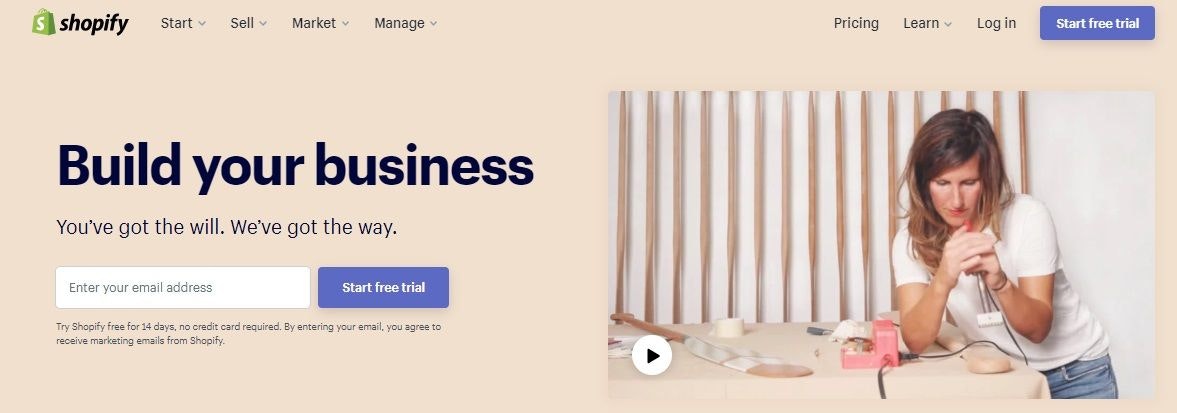
When it comes to creating your own website to sell your stuff, Shopify has got to be one of the easiest to use and most trusted. As of November 2022, more than four million sites were using Shopify to run their operations.
The basic Shopify fee is $39 per month. This includes your own website, blog, SSL certificates, abandoned shopping cart recovery, and social media sales channels, among many other tools and perks. There is no initial setup fee or other hidden fees, unless you choose to use a different payment gateway than what Shopify provides.
Shopify is an excellent platform to start selling online via your own site. It’s beginner-friendly, with excellent customer service. Plus, there are various Shopify apps you can use to customize your store, including wholesale marketplaces like Handshake. Here’s a guide you can use to launch your Shopify store in less than 30 minutes.
The following are some of the most well-known online selling sites and can accommodate just about any item you might have.
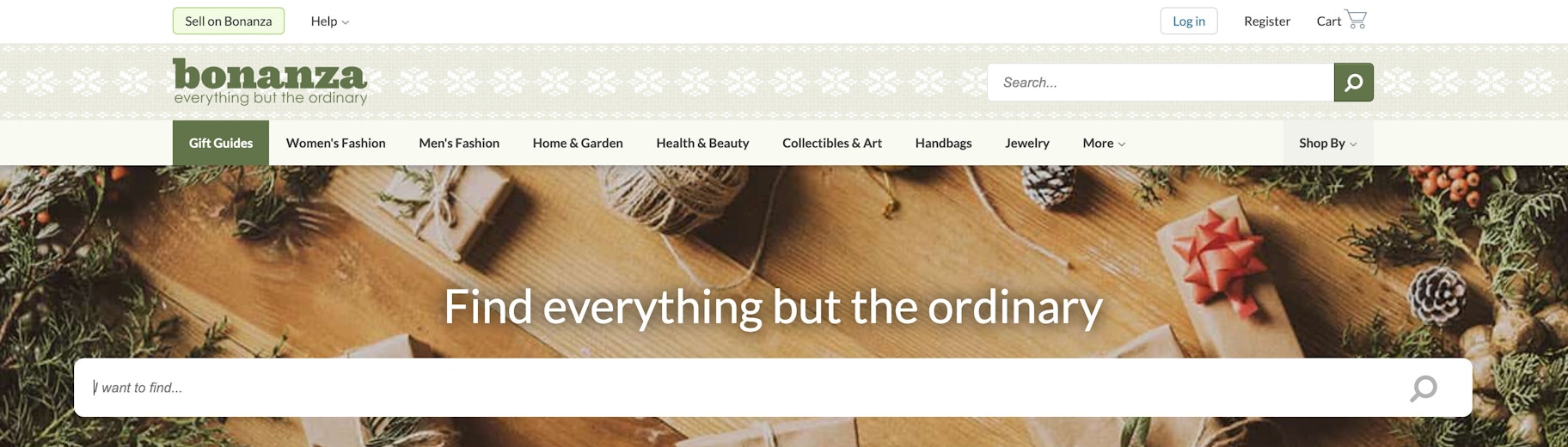
This Seattle-based company is relatively new to the online marketplace scene, yet is doing remarkably well. With more than 50,000 sellers and 35 million different items, Bonanza is a large and growing community of online shops.
The fees for selling on Bonanza are relatively minimal and are based on what it calls the Final Offer Value. The Final Offer Value is the combined dollar value of what the buyer paid plus the portion of the shipping fee that exceeds $10.
So, if you sell an item for $20 then charge $12 for shipping, the Final Offer Value is $22. The selling fee is 2.5% of the Final Offer Value, so in this example, your fee would only be 77¢. If you sell items for more than $500, the same rules apply, but there is an additional 1.5% flat fee on any dollar amount over $500.
This online selling site works well for those that are not able to pay listing fees. Setting up a shop is easy, and you only pay fees if you make a sale.
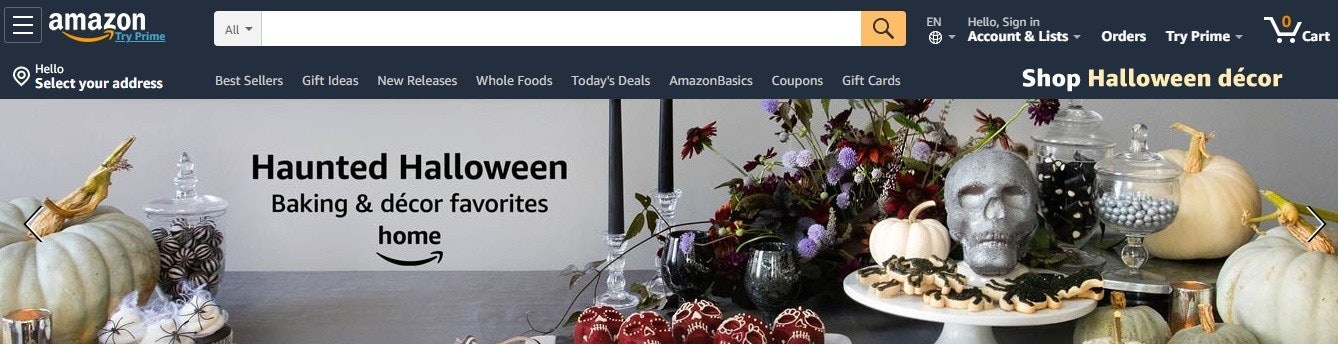
Amazon is a trusted go-to website that sells more than 400 products per minute. How is it able to sell that much so quickly? Well, people feel a sense of comfort and trust when buying from this site.
Amazon is known to verify sellers and keep counterfeit products out of its marketplace. And it’s earned people’s trust by delivering the items they want, on time. That’s why so many people consider it their go-to marketplace for online shopping. Such a large number of perks means your products are more likely to be sold, but it also means the site comes with more fees.
A professional selling account on Amazon requires an application process as well as a $39.99 monthly fee. There are also fees for each item sold. If you don’t plan on selling more than 40 items a month, you can get an individual seller account that requires no monthly fee. The individual seller account charges a 99¢ per item fee plus percentage fees on top of that, depending on the category in which your item is selling.
Amazon is great for those looking to move large quantities of products or need exposure to a larger audience.
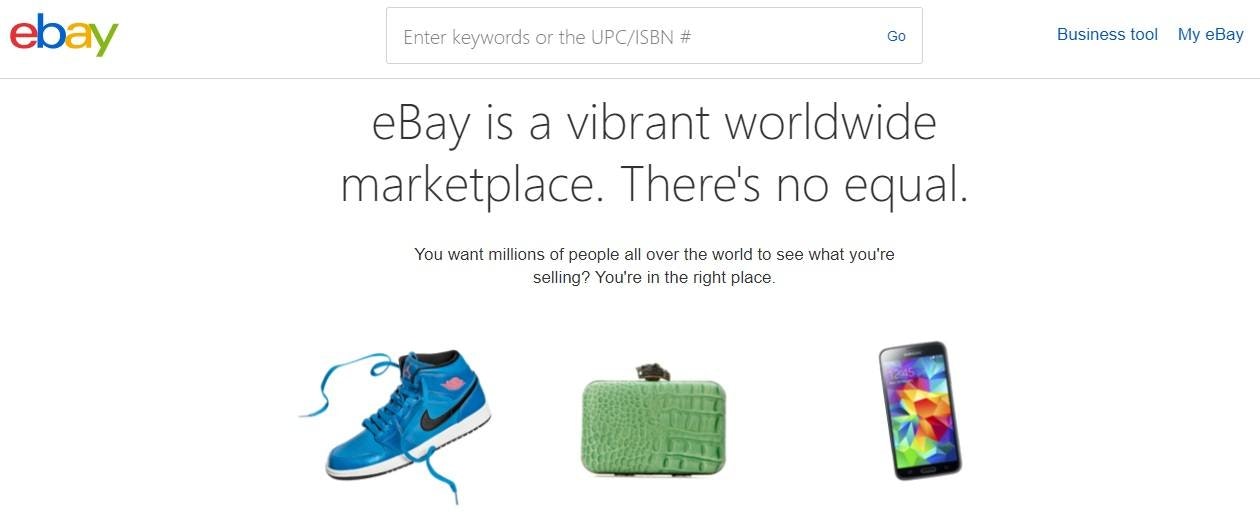
The original online selling platform, eBay has been on the web since 1995. There is almost nothing you can’t sell on this website. So if you’re looking to sell something antique, crafty, or a little weird, this might be the online selling site for you.
Be aware of the selling fees when selling on eBay. It charges a non-refundable fee to list an item and another “insertion” fee if you decide to list the same item in another category.
There’s also a “final value fee” that is a certain percentage (eBay says it’s 10% to 12% for most categories) of the price that your item sells for, plus a percentage of the shipping costs. These fees vary and are calculated based on what your product is, how many, and what types of categories it is listed in, as well as shipping.
According to 2021 eBay Statistics, eBay has over 1.7 billion listings and 135 million users, worldwide. Similar to Amazon, it’s an incredibly large buyer network. However, keep in mind that eBay as a brand is generally less trusted than Amazon.
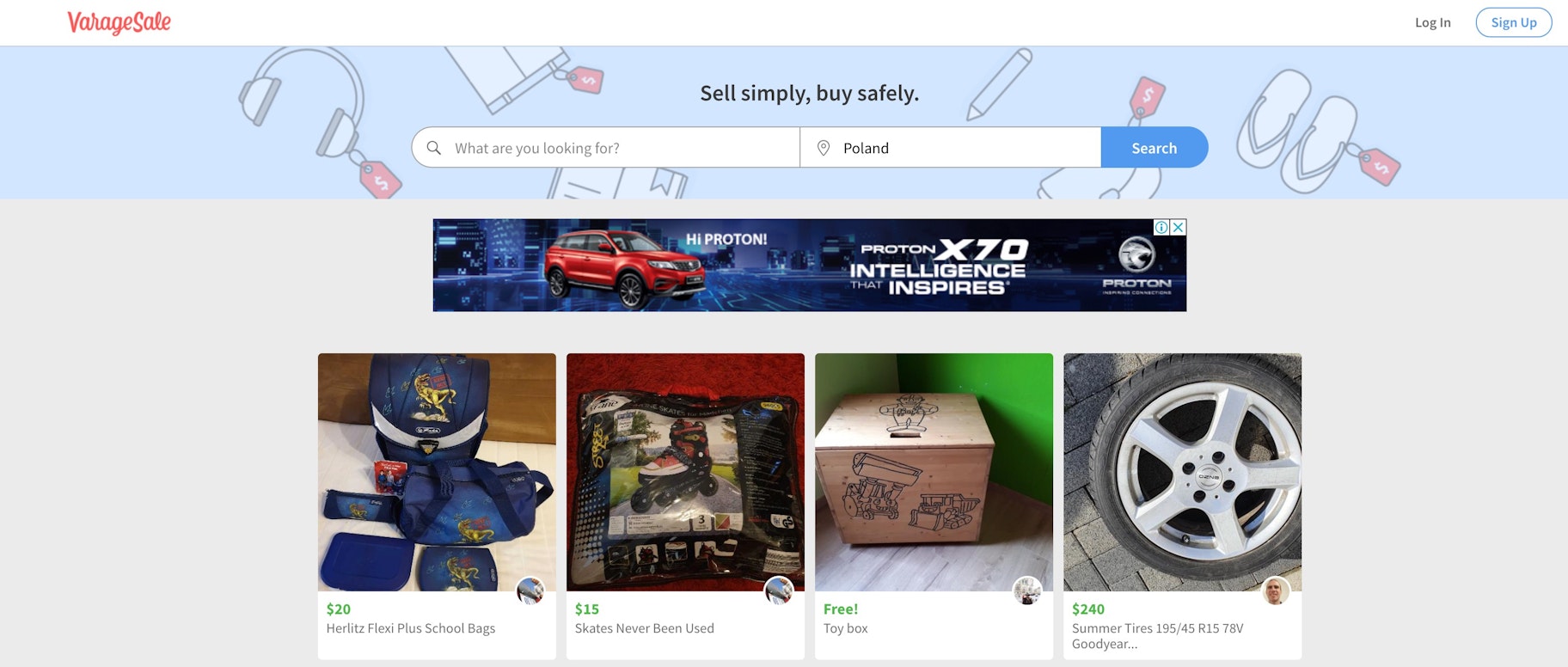
VarageSale is a Toronto-based online selling platform created by an ex-elementary-school teacher who grew frustrated with the scams and illegitimate listings on classified sites.
The site requires sellers to create a Facebook verified profile to ensure that merchants use a real profile image and name, along with a personal bio. This helps buyers feel comfortable doing transactions as they have a better idea of who they are dealing with.
VarageSale members can sell products online for free. As a seller, you can create a listing with a headline, description, and product photo. If someone is interested in making a purchase, they can reserve your item and plan an offline meetup for exchange, or use Stripe to make an online payment.
As of this writing, the platform isn’t charging a seller or transaction fee from merchants.
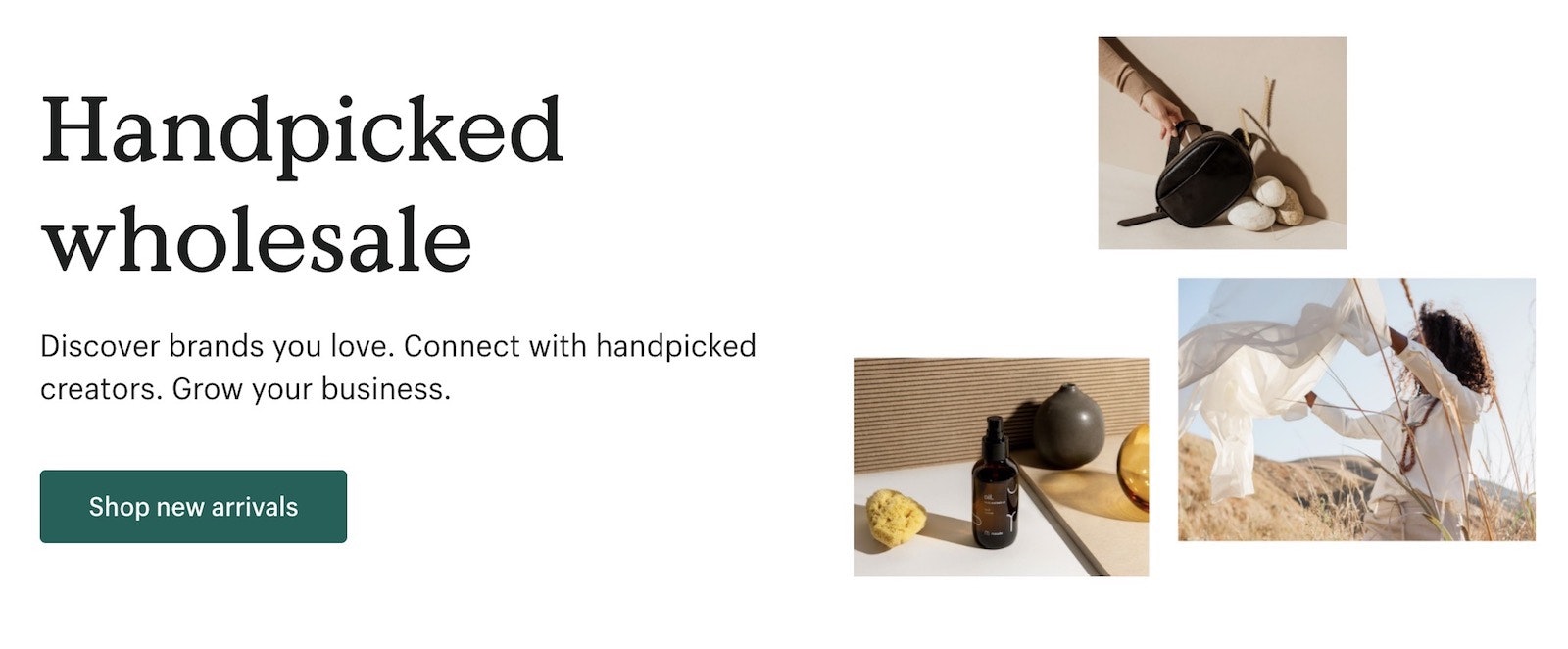
Built and operated by Shopify, Handshake is a wholesale marketplace designed to bring suppliers and retailers together. Retailers can join Handshake whether they are brick-and-mortar or online (or both), and suppliers are handpicked by the Handshake team. If you sell unique, distinctive products under your own brand, you can apply to sell wholesale on the platform.
In addition to hosting a massive collection of unique, non-mass-produced products, Handshake stands apart from other online selling sites because of its integration with Shopify.
Shopify is the world’s leading ecommerce platform, which enables wholesale creators and retailers to manage inventory, track sales, and execute new orders from within the same ecommerce ecosystem they might be using already. This stands out in the world of wholesale marketplaces, which often require CSV uploads and other manual upkeep.
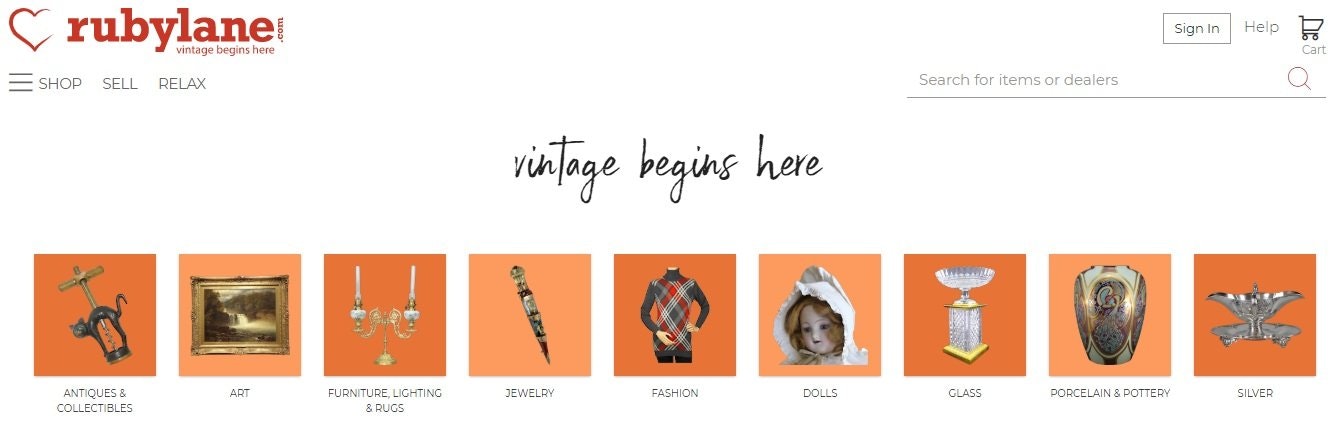
Probably the best online selling site and shopping forum for vintage and antiques, Ruby Lane was voted the number one recommended selling venue a few years back.
There’s no fee to set up a shop with Ruby Lane, and the platform doesn’t charge you for listings. However, you need to pay a $54 monthly maintenance fee for shops with 50 items or more. Additionally, RubyLane charges a 6.7% service fee on total purchase order (excluding sales tax).
This online selling site is designed to bring collecting enthusiasts together. If you are looking for a niche selling website for your antiques and collectibles, this is likely the site for you. Be mindful of the fees, though.
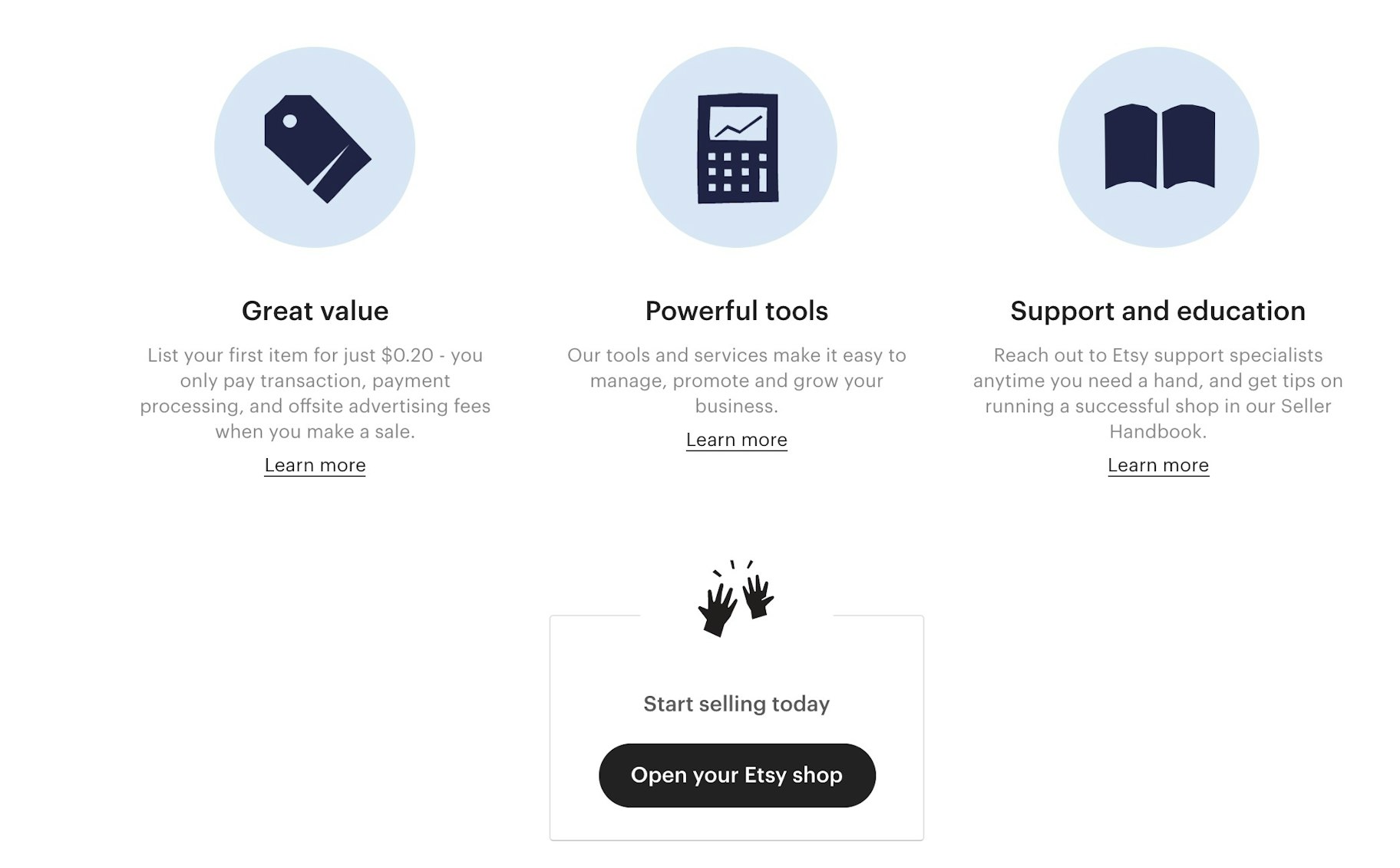
Much like Ruby Lane, Etsy caters to more of a niche market than that of eBay or Amazon. Here, you can sell your handmade goods, art, collectibles, and antiques. With annual sales in the billions, Etsy is considered to be a lucrative platform for online selling.
Etsy charges a 20¢ listing fee for each item. The item stays in your shop for four months or until it sells, whichever comes first. When you sell an item, there is a 5% transaction fee and a 3% plus 25¢ processing fee (this varies based on the location of the seller’s bank).
The transaction fees apply to just the listed price (not to sales tax) if you’re selling from Canada or the US. However, the platform will take 5% of the overall shipping charges should you decide to charge customers a separate shipping fee.
Etsy is well known and respected. Its ease of use and overall good standing in the online selling world make this site one of the best places to sell your stuff online.
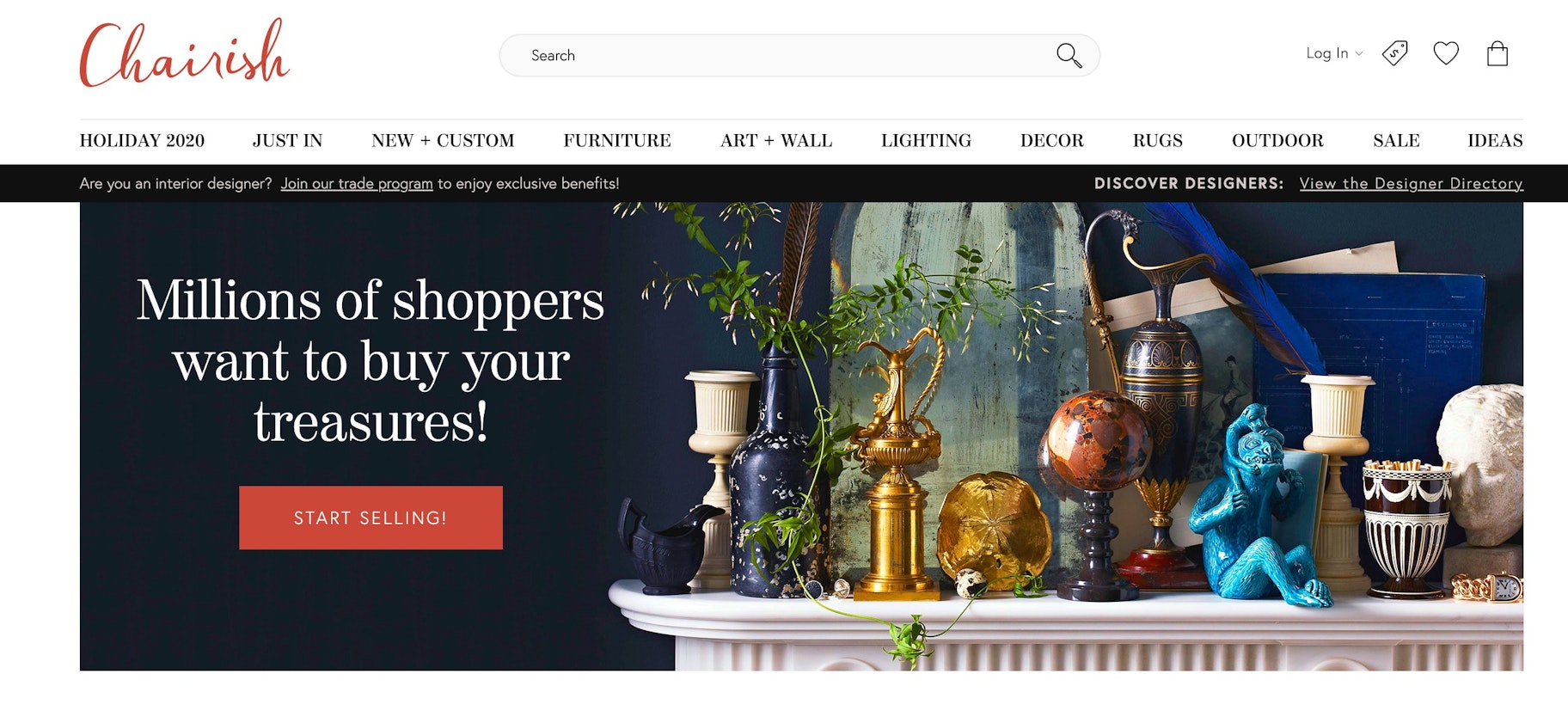
This growing online consignment store is geared specifically for high-quality furniture and home décor. Listing items is easy on Chairish, and like any consignment store, it takes a percentage of the selling price.
The percentage that Chairish keeps depends on how much your item sells for: 20% of the first $2,500, 12% of the next $22,500, and 3% of the next $15,000. In the example on its website, if you sell an item for $40,000, you get to keep $35,350.
The best part is that listing your items is completely free. You list your items, and the curators at Chairish review them to make sure they meet their standards. Then they touch up your provided photos and make the item available for purchase.
Chairish also takes care of the shipping logistics, so you don’t have to worry about shipping large pieces of furniture (just as you don’t when you engage in dropshipping). You can also arrange your own shipping if that suits you.
Chairish is a great online selling site for those that want to sell furniture and other home décor. It upholds high standards, which is ideal for buyers and collectors.
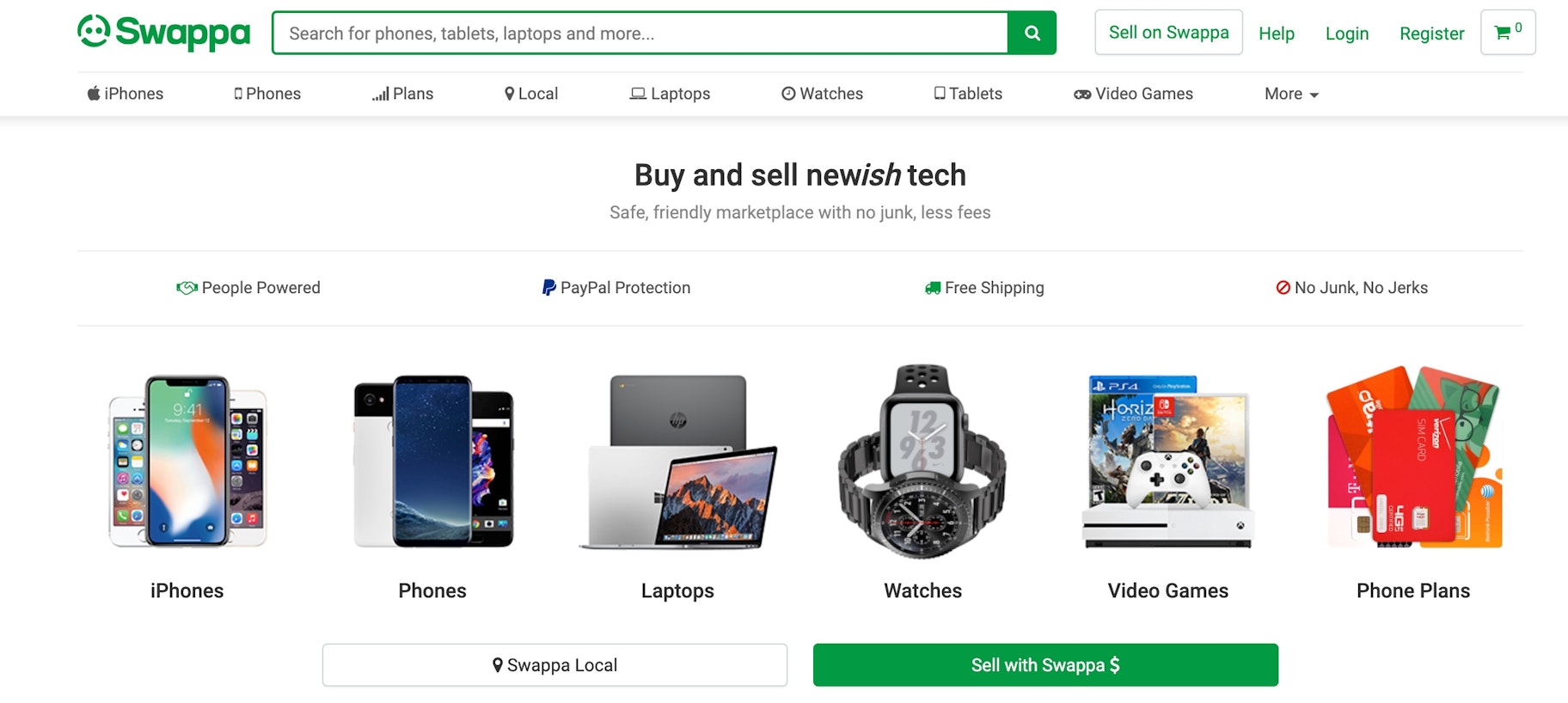
Do you have a smartphone that you no longer use? A camera lying around gathering dust in your drawer? Maybe you can consider turning them into cash since they don’t really have much utility for you.
Swappa is a marketplace to buy and sell tech gadgets. The team behind the platform have done a great job at weeding out the trolls and fraudsters, which has helped it gain an excellent reputation. Of course, this means they will thoroughly scrutinize your item, which won’t be a problem if you’re selling products in good working condition.
Swappa doesn’t charge seller fees to create listings. However, you can choose to get a listing featured for a $5 fee. Also, transactions on Swappa typically happen via PayPal, which charges a fee from sellers when buyers make a payment. Still, Swappa has one of the lowest fees amongst all the marketplaces on our list.
You can also choose to use Swappa Local, a version of the platform that allows you to sell tech gadgets to local buyers in your community.
Introduced in October 2016, Facebook created Facebook Marketplace to bring people in communities together to buy and sell. What’s exciting about Facebook Marketplace is that the company is starting to support ecommerce merchants.
Facebook has partnered with online selling platforms, such as Shopify, to facilitate online merchant presence on Marketplace. Shopify users can sell stuff locally while managing inventory on a familiar back end.
There are no listing fees, but there are specific requirements and guidelines you must follow as a merchant on Marketplace.
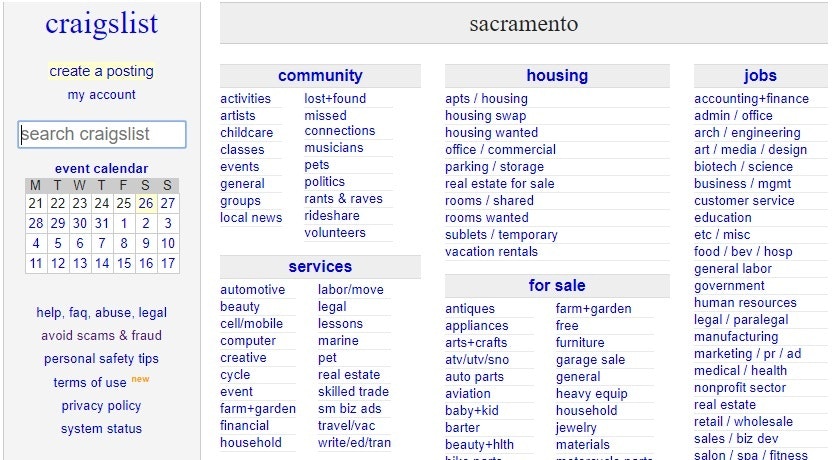
Basically just a forum, Craigslist is basic and easy to use. Started in 1995 by Craig Newmark, it was originally developed to provide information on local happenings around the San Francisco Bay Area. It is now a go-to online selling site for many individuals and even some businesses.
The downside of Craigslist is the rampant scams and the “you’re on your own” style of dealing with fraud and disputes, which makes it a higher-risk selling site.
This online selling site is best suited for those who prefer to sell locally and make deals in person. Some people take advantage of buying low and selling high on Craigslist, which can turn a pretty profit for those into market arbitrage.
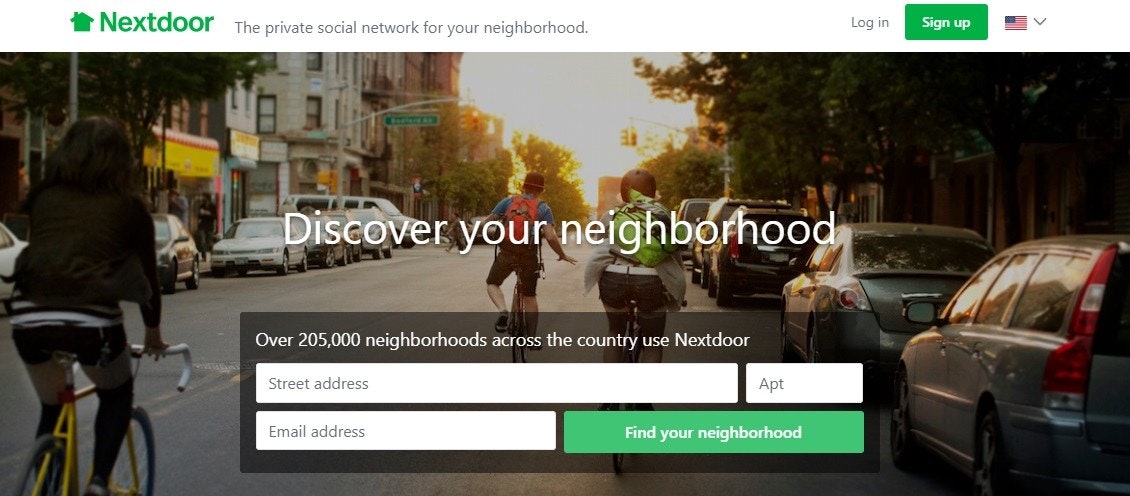
Similar to Craigslist, Nextdoor is about community. It’s a platform where neighbors can share information about what’s going on in their area—from announcing a block party to complaining about the traffic on their streets.
Beyond being a neighborhood forum, Nextdoor also provides a free forum for selling your stuff online. Like Craigslist and Facebook Marketplace, there are no listing or membership fees, but you do have to meet your buyer and make the exchange in person.
This platform feels a little safer than Craigslist, as it requires that you sign up and create an account. Because of that, it tends to be more private and have fewer scams.
No matter what you’re selling or how you want to sell it, there is an online selling site that fits your needs. Whether you want to clear your cluttered home, expand your reach for your retail store, or break into the ecommerce scene with your unique brand, you’re sure to find a platform on this list that works for you.
Got a site you love to use that isn’t listed here? Let us know in the comments!
There are many sites to sell your products online. You could consider Shopify, Handshake, Bonanza, eBay, Etsy, Facebook Marketplace, or Craigslist, to name a few.
Ruby Lane, Facebook Marketplace, Nextdoor, and Etsy are known online clothes selling sites. Each varies in fees and costs, but their brands are strong and reliable.
Handshake, Chairish, VarageSale, and Bonanza are examples of top online selling sites for individual sellers. Each has a strong community of entrepreneurs and a loyal customer base that keeps coming back for more.